
August 2015, When I First Connected the Dots
I first connected the dots in August 2015, when something clicked. It was years after I launched Advanced TV Herstory that I arrived at the tagline: Connecting the dots of TV and Feminism to American Culture and Politics. Looking back, I am proud of those episodes and the voice they held in a very different and barren corner of the 2015-2016 podcasting world. I was connecting ideas of what was happening in real life with what we saw on television. We know it as “cause and effect” or which came first, the chicken or the egg… does television influence real life, or does real life drive television.
Is it sometimes both?
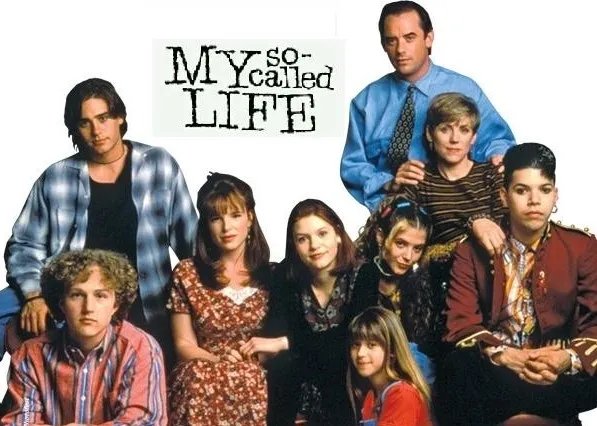
My So-Called Life
When asked, how did I arrive at connecting the dots, I have only one story. I was working on a profile of the women characters of My So-Called Life (1994-95) and of course had viewed all 19 episodes to fully refresh my memory. The women characters, primarily two mothers and two daughters are, to this day, fascinating. The show’s creators were skillful and realistic is depicting the most stressful years of the mother-daughter relationship… x 2.
But I had a big question about the show’s abrupt cancellation. Pondering that question at 2 am on August 12, 2015, I remember springing out of bed and booting up the computer. This is a portion of the script – at a time when my thoughts were expressed as the podcast’s. Click here to listen to the episode.
My So-Called Life is remembered for not sugar-coating the many ethical and moral questions of life. In that sense, the show is nearly timeless. There aren’t many distractions or deviations from the growth curve set for each major character.
A Woman Writer at Work
Much of that is due to the experience of writer and producer Winnie Holzman. Holzman had previously worked on the series thirtysomething, which also was a production of Marshall Herskovitz and Ed Zwick. They also all collaborated on Once and Again (1999-2002), which starred Sela Ward.
Wikipedia paints Holzman’s road to Hollywood as one of poet, sketch comic and musical theater writer. In a 2014 interview for Vulture Online Magazine, about My So-Called Life’s plotlines, Holzman said this:
“Series television is kind of intensive in terms of time. You fall hard for TV writing, but it’s almost love-hate. You’re under pressure all the time, but that pressure gets interesting things out of you that are, you know, mysterious. The whole idea of a dream, to me, is a mystery plane. Things are operating there that tell us the real truth. The stuff going on inside us that we don’t express or even know about pours out in our dreams. In a funny way, it was a way for me to instantly get to a deeper psychological place.”
These three dramas – thirtysomething, My So-Called Life and Once and Again are highly regarded for their thoughtful approaches to real life situations.
Advanced TV Herstory highly regards My So-Called Life, and all the people associated with it. Unfortunately, for all sorts of reasons, it lasted only 19 of the first season’s 22 episodes. The network cancelled it without fanfare or headlines – mid-story arc. MTV News coverage of the campaign to save My So-Called Life is available online. In it, a young Claire Danes speaks to the show’s risk taking and honesty.
In other interviews, both Danes and Holzman assert that maybe it was all just too real to attract the significant audience size a TV show needs to sustain itself. It was deep. Thoughtful.
My 2-Cents… 2 Dots
Advanced TV Herstory wants to posit one more reason for the show’s abrupt cancellation in 1995.
In the last episode, viewers followed the on-going romantic entanglements of Jordan and Angela, and Graham and Hallie. Brian and his feelings for Angela advanced. A new minor character Delia revealed her feelings for Rickie (who we learn, officially, is gay).
In 1995, being gay and under 18 was a pretty big deal for prime time. Just two years earlier, Congress called for an investigation of PBS over its airing of an adaptation of Armistead Maupin’s Tales of the City, which featured a gay character. Gay characters – mostly men – had been show in more comedies than dramas.
But in 1995, I have to wonder if between the network execs and irate sponsors. The idea of a Puerto Rican-American teenage boy declaring he’s gay was just too much. And such declaration, from a character who regularly worships in the Catholic Church and wears a crucifix, would only lead to more complex and controversial story lines. Would those story lines pick up where we left off… with Rickie’s temporary stay with the gay English teacher and his partner?
So Advanced TV Herstory has researched extensively and hasn’t been able to answer this question: Did Winnie Holzman know this was truly the last segment and put all her eggs of controversy – namely that of Rickie’s sexuality – into that one final basket? Or was Holzman plodding along thinking she had three more episodes in which she could bring closure to story lines. Clearly, episode 19 brought it all to an abrupt halt.
Since there’s no evidence pointing in any direction, Advanced TV Herstory appreciates Winnie Holzman for her profound capacity to tell a story and tell it like it is through the eyes of women. We applaud her leading the team right up to the brink of a breakthrough moment in TV.
Everyone associated with the show has stuck to the talking points of low ratings and intense story lines. But producers Herskovitz and Zwick were established showrunners. This was another example of their quality work. At the risk of sounding like a suspicious teen, it just seems so…. odd.
The show ends with a thousand questions and open story arcs all over the place. That’s kind of fitting, for a series that featured teens constantly trying to understand the rhyme and reason of the adult world.
** ** **
I’m remain wildly proud of this episode.
